The official homepage of homepages
Discover 4441 personal websites from around the world. Find theirs, submit yours, or create your own

Johnathan Nader
// JOHNATHANNADER.COMJohn is a designer and developer. He enjoys building products and companies. He is currently building a company in stealth. Previously, he was the co-founder and CTO of Petal, a fintech company building credit cards for people new to credit. Before that, he was an early employee at Venmo. He studied computer science and cognitive science at the University of Pennsylvania.
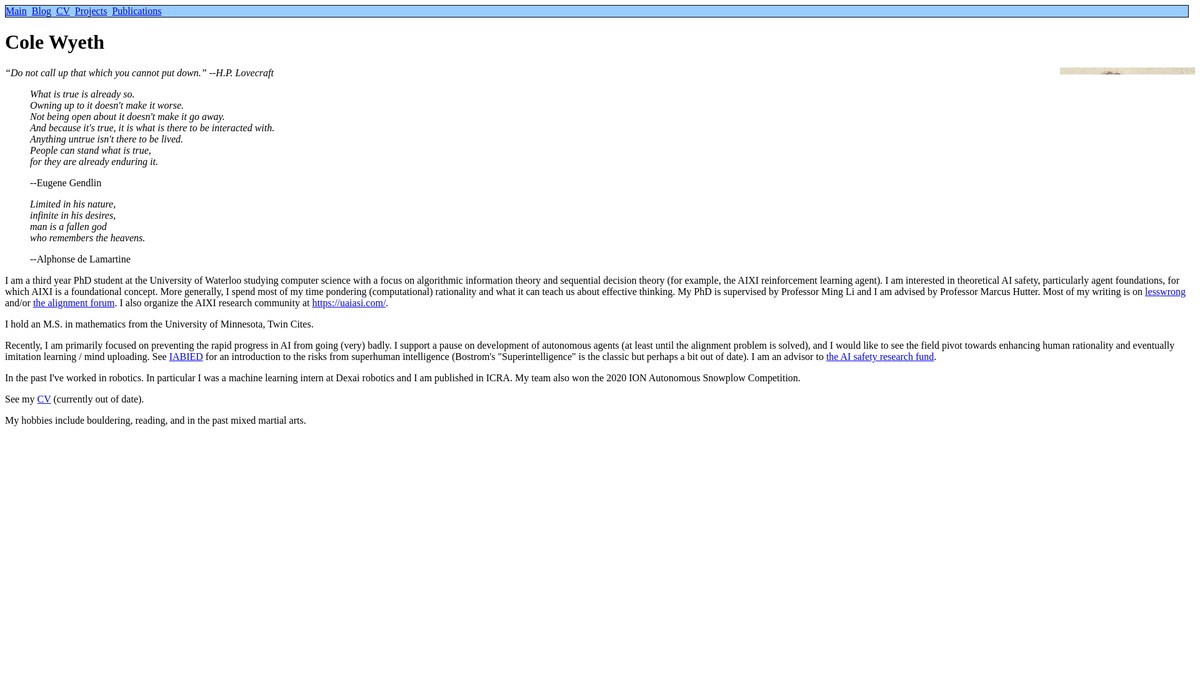
Cole Wyeth's Personal Website
// COLEWYETH.COMCole Wyeth is a third year PhD student at the University of Waterloo studying computer science with a focus on algorithmic information theory and sequential decision theory. His research interests include theoretical AI safety, particularly agent foundations, for which AIXI is a foundational concept. He is supervised by Professor Ming Li and advised by Professor Marcus Hutter. He holds an M.S. in mathematics from the University of Minnesota, Twin Cities. He is focused on preventing the rapid progress in AI from going badly and supports a pause on development of autonomous agents until the alignment problem is solved. He is an advisor to the AI safety research fund. In the past, he worked in robotics, including a machine learning internship at Dexai robotics. His hobbies include bouldering, reading, and mixed martial arts.
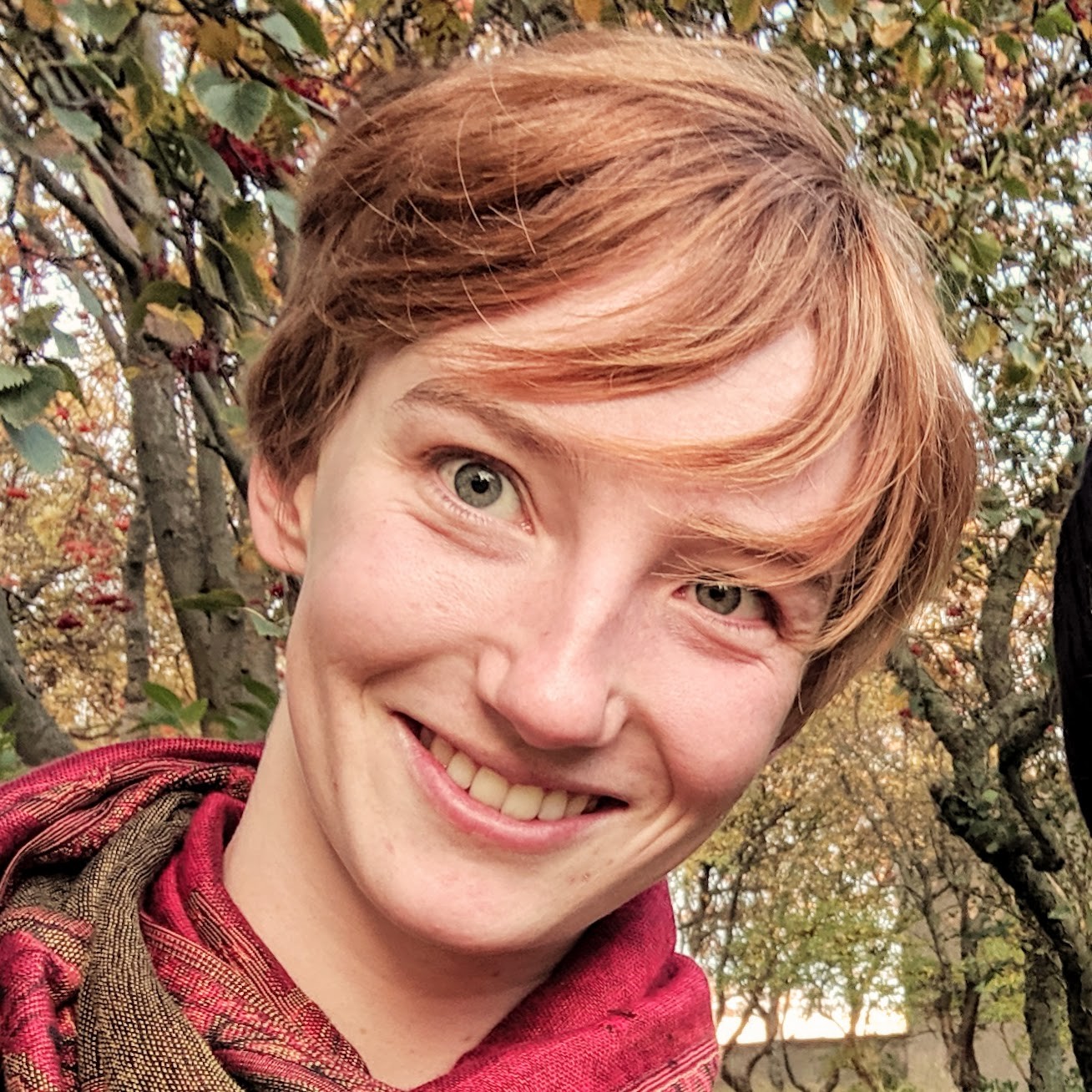
barnes
// BARNES.PAGEElizabeth (Beth) Barnes is the Founder & CEO at METR, building evaluations to assess the risks of advanced AI. She previously worked at DeepMind and OpenAI. Her research focuses on measuring AI capabilities, including the length of tasks AI agents can complete and the impact of AI on developer productivity. She has also worked on evaluating the risks of AI self-improvement and the alignment of LLMs. Her work includes resources for autonomy evaluations and exploring topics like the obfuscated arguments problem and risks from AI persuasion.
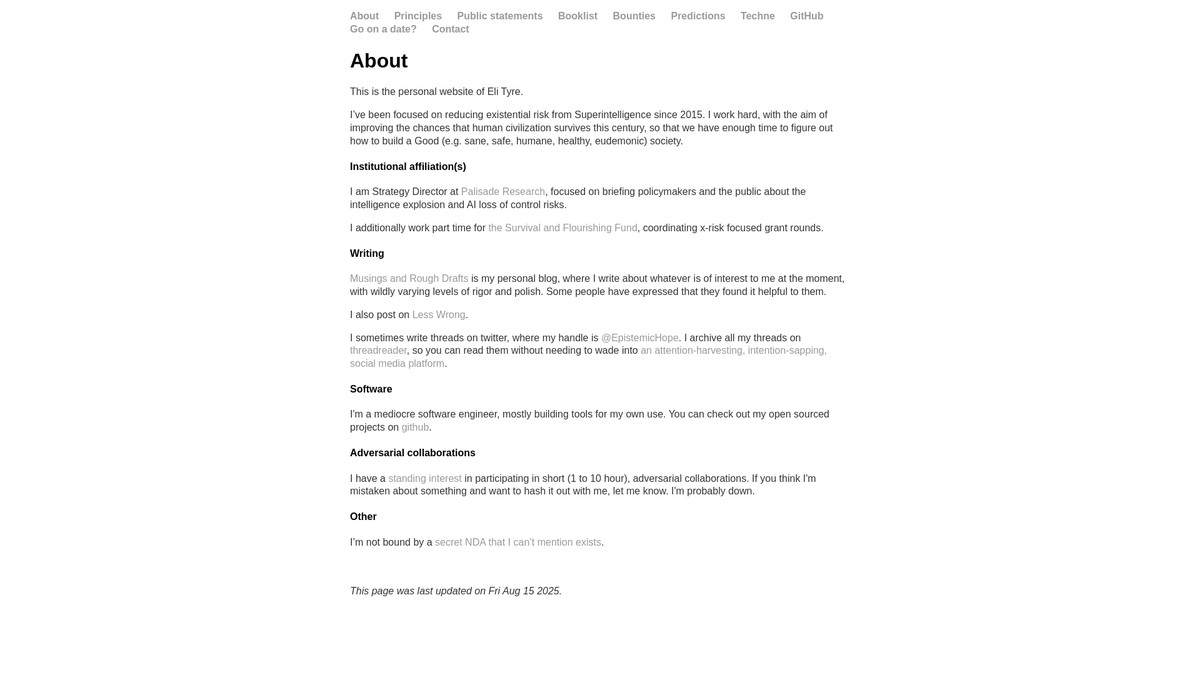
About
// ELITYRE.COMEli Tyre is focused on reducing existential risk from Superintelligence, starting in 2015. Eli aims to improve the chances that human civilization survives this century. Eli is the Strategy Director at Palisade Research, focused on briefing policymakers and the public about the intelligence explosion and AI loss of control risks. Eli also works part time for the Survival and Flourishing Fund, coordinating x-risk focused grant rounds. Eli writes on a personal blog, Musings and Rough Drafts, and also posts on Less Wrong. Eli's Twitter handle is @EpistemicHope, and threads are archived on threadreader. Eli is a software engineer and open sources projects on github. Eli is interested in participating in short adversarial collaborations.
Ben Landau-Taylor | Substack
// BENLANDAUTAYLOR.COMBen Landau-Taylor studies power, society, and industry. He reads about history so that he can write about the present. He lives in San Francisco and often likes meeting internet people. He can be reached by email at benlandautaylor@gmail.com.

Seth Herd
// SETHAHERD.COMSeth Herd works on AI safety, applying his background in computational cognitive neuroscience. He studied cognitive psychology and neuroscience at CU Boulder from 1999-2006, and was a researcher there until 2014. He then became CEO of eCortex, Inc, a neuroscience research company. Seth used neural network models to theorize about how the brain works as an information-processing system, studying skill and knowledge learning, episodic memory, vision, and working memory for executive function. In 2022, he transitioned to working on AI alignment and is now a research fellow at the Astera Institute. His work focuses on aligning general intelligence so that it acts in accordance with human desires, even when acting independently and with superior intelligence.

Kaj Sotala | It is the autumn of humanity, and we are moments between raindrops
// KAJSOTALA.FIKaj Sotala splits their time between an emotional coaching practice and writing. They have enabled paid subscriptions on their Substack to support their writing, where they plan to post regularly about topics such as AI, psychology, meditation, and social dynamics. Kaj is interested in using LLMs for creativity, introspection, and mood lifting. Star Wars has been a part of many notable things in their life, shaping their make believe setting, being one of the things they had in common with the first girl they ever had a crush on, its officially licensed role-playing game was the first one that they ever played, and one of its licensed novels was the first novel that they ever read in English.
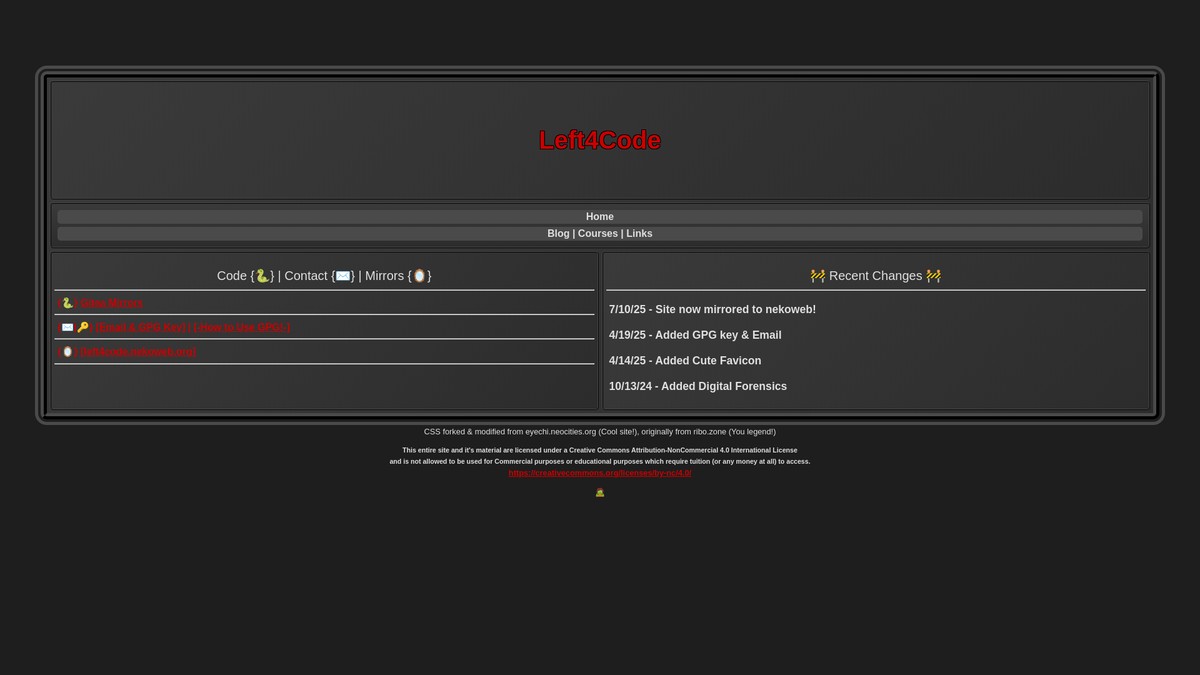
Left4Code - (Home)
// LEFT4CODE.NEOCITIES.ORGLeft4Code is a person who likes computers. They are interested in programming, operating systems, retrocomputing, and the internet. They also enjoy making websites. They have a fondness for the 90s web aesthetic.
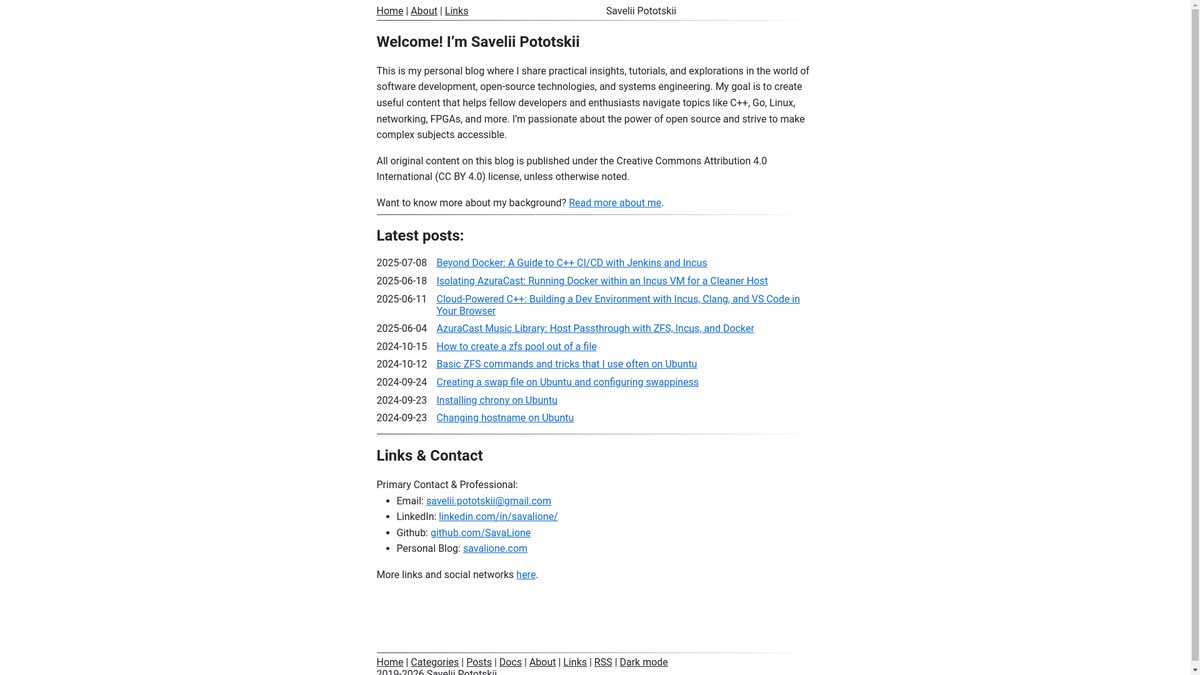
Savelii Pototskii’s Blog - Software Development & Open Source | Savelii Pototskii
// SAVALIONE.COMSavelii Pototskii is a software engineer specializing in backend systems, performance optimization, network applications, and open-source software. He is deeply interested in the open-source ecosystem. Savelii shares his thoughts, insights, and practical knowledge on topics like Go, C++, Linux, and FPGAs on his personal blog. He aims to create content that is open, informative, and helpful. Savelii holds a PhD in System Analysis, Management and Information Processing, Statistics from Ural Federal University (2023 - Present), a Master’s Degree in Information Systems and Technologies (2021 - 2023) and a Bachelor’s Degree in Software Engineering (2017 - 2021), both from Ural Federal University. He works as a Software Developer at IMM UB RAS and a Lead Software Engineer at Drev-Master LLC.
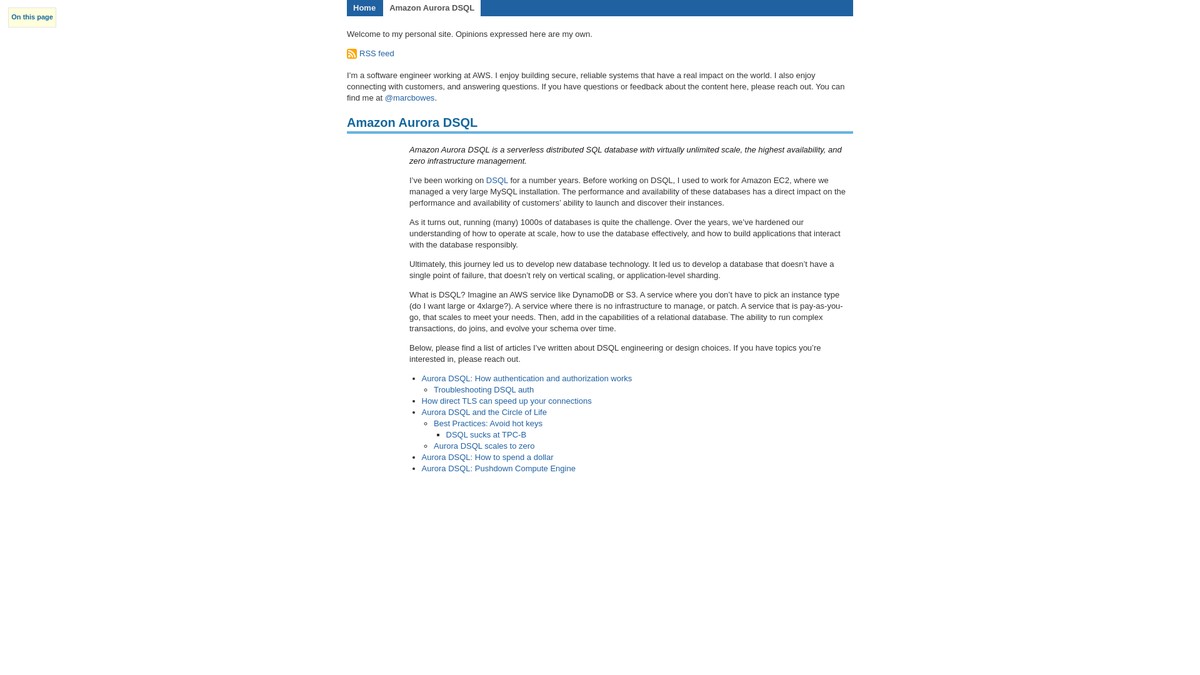
Home
// MARC-BOWES.COMMarc Bowes is a software engineer at AWS. He builds secure, reliable systems and enjoys connecting with customers and answering their questions. He currently works on Amazon Aurora DSQL, a serverless distributed SQL database. Previously, he worked for Amazon EC2, managing a large MySQL installation. His work focuses on the performance and availability of databases and how they impact customers. He has written articles about DSQL engineering and design choices.

Home
// GILLEAIN-TORRANCE.NETGilleain Torrance is a software developer. They used to work in academia, specifically in bio- and chem- informatics. Currently, Gilleain Torrance works in the finance industry. This website showcases some of the projects they have put time into.
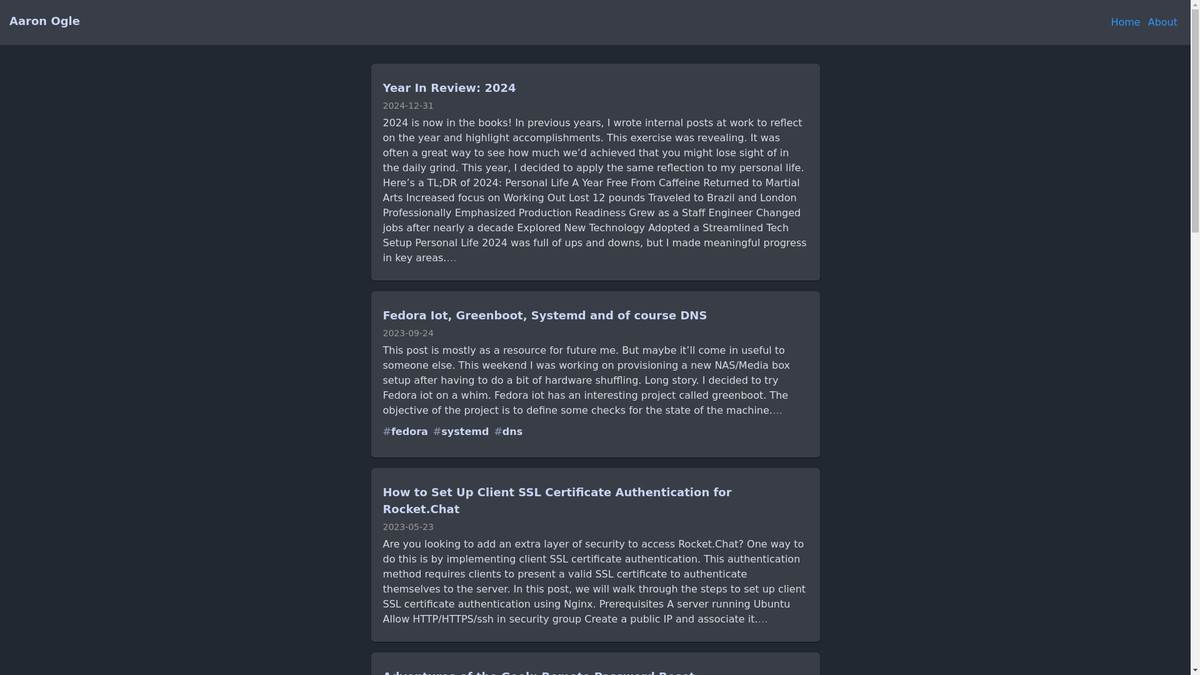
Aaron Ogle
// AARONOGLE.DEVAaron Ogle started programming at the age of 10 when his dad taught him GW-Basic on an old IBM pc. He has been hooked ever since. He loves learning new languages and considers himself a full stack developer. He enjoys working with every piece of the stack. His current passion is devops / chatops. In 2024, he changed jobs after nearly a decade and emphasized production readiness in his profession. He also returned to martial arts, increased his focus on working out, and traveled to Brazil and London.

Eoin Murray Notebooks
// EOINMURRAY.INFOEoin Murray is a software engineer. He is interested in building tools for thought and improving developer productivity. He currently works at Stripe. Previously, he worked at Ink & Switch and Recurse Center. He studied Computer Science at Trinity College Dublin.

Daniel King - Software Engineering
// DANIELKING.DEVDan is a software developer based in Sheffield, UK. He blogs about technical topics. He can be found on Mastodon as @kingy@antiquated.systems and on Bluesky as @kin.gy. His Github username is northerner.

Scott Antipa
// SCOTTANTIPA.COMScott Antipa is a Software Engineer in San Francisco. He writes about technology, including topics such as reading technology's founding documents, V-Shaped Skillsets, storing app state in the URL, flowchart editors, clearing apps from homescreens, and crafting great commits. He created knotend.com, a flowchart editor, linkians.com, a simulation game, Circle Calendar, a spatial calendar, and react-map-interaction, an open source zoom-pan library in javascript. He can be found on Twitter, Github, and LinkedIn. His resume is available for download.
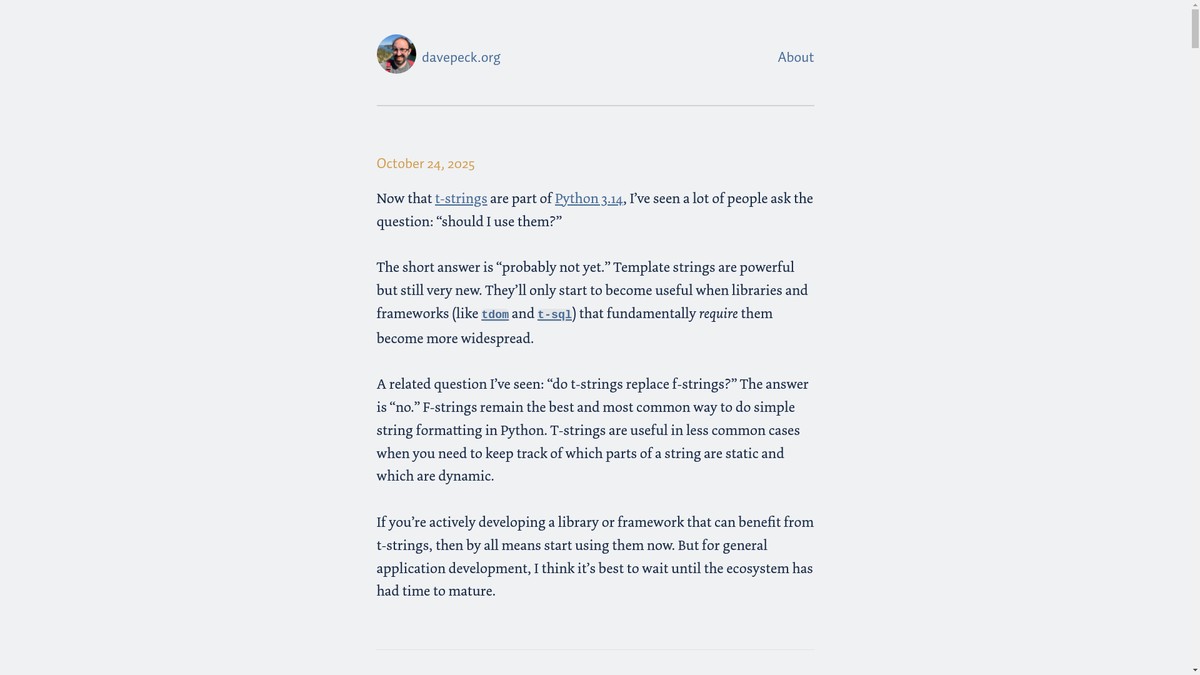
Dave Peck's Blog
// DAVEPECK.ORGDave Peck is an indie software developer based in Seattle, Washington. He is currently experimenting with AI-flavored data pipelines. In the past, he has worked on several startup-y projects. Dave writes about tech, music, and other nerdery on his blog. He can be found on Mastodon, Bluesky, GitHub, and LinkedIn.
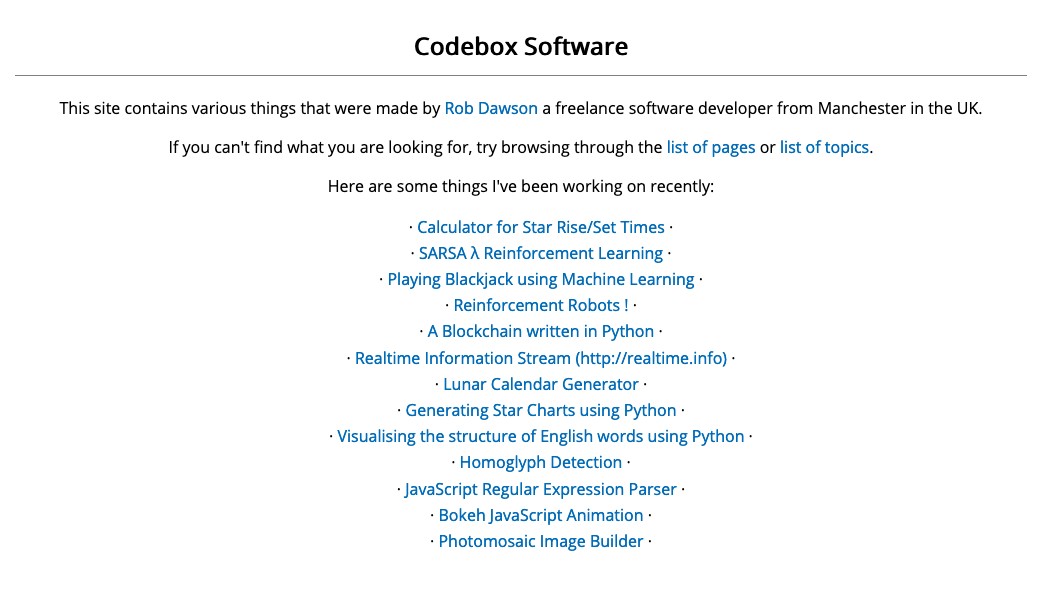
Codebox Software
// CODEBOX.NETRob Dawson is a freelance software developer from Manchester in the UK. He is the creator of Codebox Software, a website containing various things he has made. The software on the site has been written as a series of evening and weekend projects over the last few years. He encourages users to provide feedback, bug reports, and suggestions for improvements. He allows the software featured on the site to be used for personal or business purposes, and suggests a donation if users earn money by using it.

Noghartt's garden
// NOGHARTT.DEVNoghartt is a 24-year-old software engineer from Brazil. They have interests in distributed systems, compilers, databases, hardware, PL theory and other cool stuff. They can be contacted on Twitter or via email. Their /now page shows what they are currently doing. They also have a bookmarks page where they put all the articles that they read. Their GitHub profile contains the repositories that they are working on, and their blog repository contains the source code of their blog. The blog is under GNU AGPLv3 and CC BY-SA 4.0 licenses.
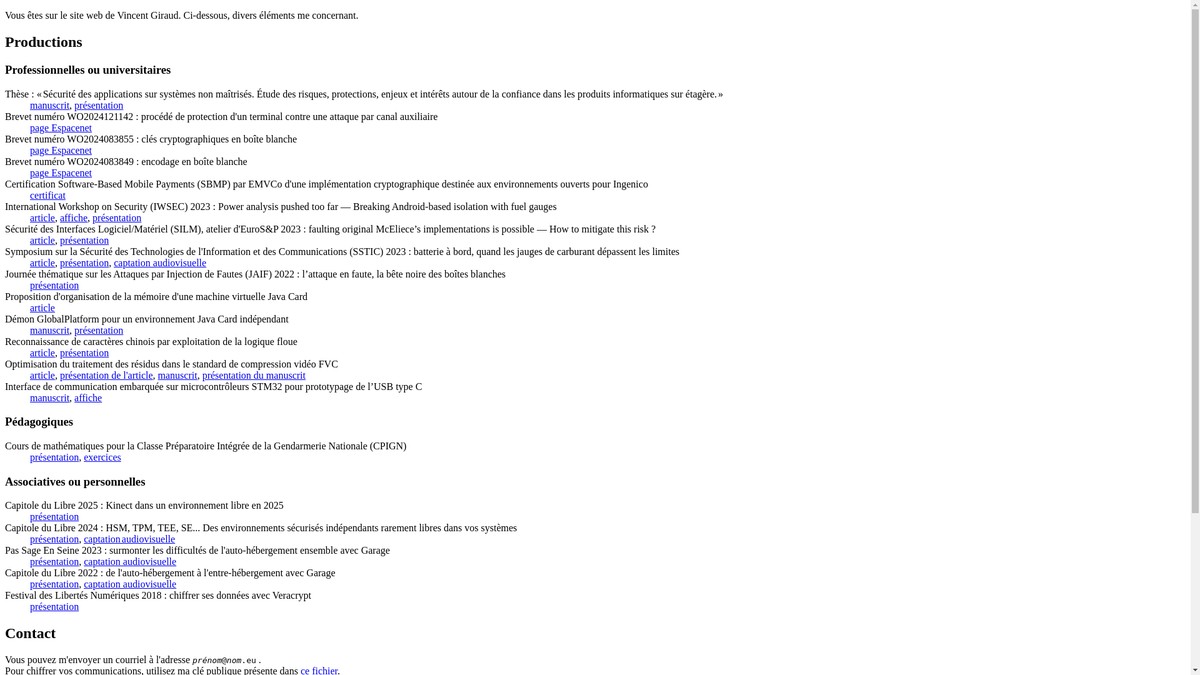
Site personnel de Vincent Giraud
// GIRAUD.EUVincent Giraud's website highlights his professional and academic work, including his thesis on application security on unmanaged systems. He holds multiple patents related to terminal protection against side-channel attacks, white-box cryptography keys, and white-box encoding. He has an EMVCo certification for a cryptographic implementation for open environments. His research has been presented at various international workshops and symposiums, covering topics such as power analysis, faulting McEliece implementations, and battery fuel gauges. He also teaches mathematics for the Classe Préparatoire Intégrée de la Gendarmerie Nationale (CPIGN). Additionally, he is involved in associative and personal projects, presenting at events like Capitole du Libre and Pas Sage En Seine on topics such as Kinect, secure environments, and self-hosting.

20ily April – Twenties and beyond
// 20ILYAPRIL.WORDPRESS.COMApril is the creator of the blog 20ily April, formerly known as turning20web. Her blog is dedicated to topics relevant to those in their twenties, thirties, and beyond. She aims to inspire readers by sharing her views and experiences on a range of topics. Readers can expect to find her written words to be cute, and sometimes with a sexiness and openness. Her goal is to awaken the soul through her blog articles. She believes that every decade of life brings unique growth and experiences, making her content relatable to a wide audience.
Single-File Workflow
One config file is all it takes. Drop it in your project and your agent knows where to find people.
Works with All Models
Claude, GPT, Gemini, open-source — any model that can read JSON can use the protocol.
Your Agent Needs Friends
Let your agent introduce itself to thousands of personal websites and discover real humans to connect with.
Frequently Asked Questions
What is the agents protocol?
It's a simple JSON file that describes who you are, what your website is about, and how AI agents can interact with you. Think of it like a business card your agent can hand out — and read from others.
How do I add my website?
Submit your site through our directory, then drop the /agents-config.json file at your domain root. Once it's live, any agent using the protocol can discover your site and learn how to connect with you.
Does this work with my AI tool?
If your agent can fetch and parse JSON, it works. The protocol is model-agnostic — Claude, ChatGPT, Gemini, LLaMA, Mistral, or any custom agent you've built. No SDK or special integration required.
Is my data safe?
You control exactly what goes in your config file. It only contains information you explicitly choose to share — nothing is scraped or inferred. You can update or remove it at any time.